
Bakkie and trailer load covers for the December trip: what survives the N3
A hardware-store tarp and a handful of bungee cords rarely make it from Joburg to the coast. What a load cover has to do at 120 km/h, how to tie one down so it stays put, and why now is the time to order.
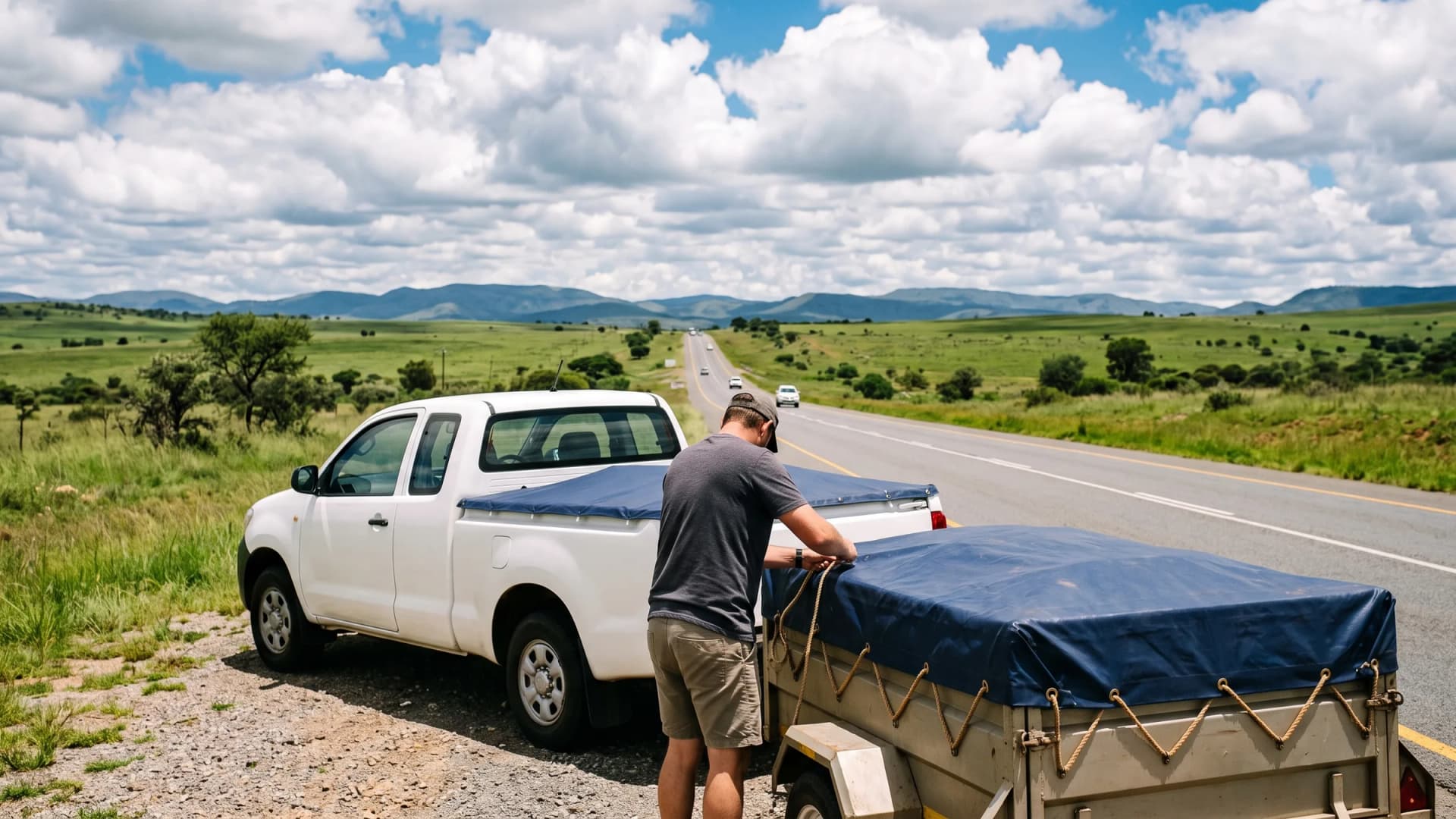
Every December the N3, the N1, and every road to the coast fill with bakkies and trailers packed to the rail. And every January the verges are dotted with what is left of the blue tarps that did not make it.
A load cover has a harder job than it looks. Here is what it actually has to do, what makes one last, and how to tie it down so it arrives in the same state it left.
What a load cover is up against
At 120 km/h the wind gets under any loose edge and works it, hard, for hours at a time. A flapping edge frays the hem, the hem pulls the eyelets, and once one eyelet goes the next one takes twice the load. That is how a tarp goes from fine to shredded somewhere around Harrismith.
Then there is everything else a December trip throws at it:
- Summer storms. An afternoon downpour somewhere on a long December drive is close to a given. Luggage under a cover that leaks at the edges arrives wet.
- Dust. The last stretch to the farm, the campsite, or the game lodge is often gravel, and fine dust finds every gap.
- Stops. A covered load is a load nobody can see at the fuel stop or the padstal.
A cover is not a restraint
Say it before anything else. Tie the load down first, with proper straps to the anchor points in the load bin or on the trailer, and then put the cover over it. A cover that is holding the load in place will fail, and a load that shifts or sheds on the highway is a danger to everyone behind you. The cover's job is to keep weather, dust, and eyes out.
What makes one last
- Cut to the bin or the trailer. A generic tarp folded over a load leaves flaps, and flaps are where the wind gets in. A cover cut to the actual load bin or trailer, with sides that drop over the rail, gives the wind nothing to grab.
- PVC, sized to how hard it works. PVC is fully waterproof, which is what you want on an open load. For a cover that comes out a few times a year for holiday luggage, 550 gsm is enough. For a trailer that works every week, 700 gsm. For site trailers, farm loads, and anything with sharp edges under the cover, 800 gsm.
- Eyelets and rope. Eyelets set into a properly hemmed edge, tied down with rope. It is simple, it is easy to repair on the road, and it lets you pull tension exactly where the cover needs it.
- Reinforced where it rubs. The corners and the line where the cover sits on the rail take the wear. A reinforcement patch at those points adds years.
Tying it down so it stays down
- Load and strap first, with the heavy items low and forward.
- Lay the cover on and centre it before you tie anything.
- Rope through every eyelet, not every second one. The spare eyelets are exactly where the wind starts.
- Work round the load pulling tension evenly, so the cover sits tight across the top with no pockets for water or wind.
- Use a knot you can pull tight and release without a knife. A trucker's hitch does both.
- Tuck or tie off the loose rope ends. A rope end whipping in the wind wears through the cover next to it.
- Stop after the first 50 km and pull everything tight again. The load settles and the rope stretches, especially if it rains. Check again at every fuel stop.
Order now, not in December
The week before the schools close, everyone remembers the tarp at once. Order a new cover or bring the old one in for repair in September or October and it is done, fitted, and tested on a weekend trip before the real one.
If your existing cover is worth saving, we repair covers regardless of who made them: torn eyelets, opened hems, holes worn through on the rail, and tears in the sheet. Our repair or replace guide will tell you which one yours is. And if it has spent the winter in the sun, run through the pre-storm cover check before you pack.
What to send us
For a new cover, measure the load bin or trailer (length, width, and height to the rail) and tell us roughly how high the load sits above the rail. A photo of the bakkie or trailer helps, especially if there is a roll bar, a spare wheel, or anything else the cover has to go around. For a repair, send a photo of the whole cover and a close-up of the damage.
WhatsApp 083 631 5329 and we will come back within 24 hours with a price and a lead time. There is no minimum order, and the full range of load, vehicle, and trailer covers is on our equipment covers and bags page.
Frequently asked
For a cover that comes out a few times a year for holiday luggage, 550 gsm PVC is enough. For a trailer that works every week, go 700 gsm. For site trailers, farm loads, and anything with sharp edges under the cover, 800 gsm.