
Repair or replace? When a torn tarpaulin or cover is worth fixing
Most damaged tarps and covers are repairable, and a repair costs a small fraction of a new one. But not all of them are. Here is the honest way to tell the difference, what we can fix, and what we need from you to quote.
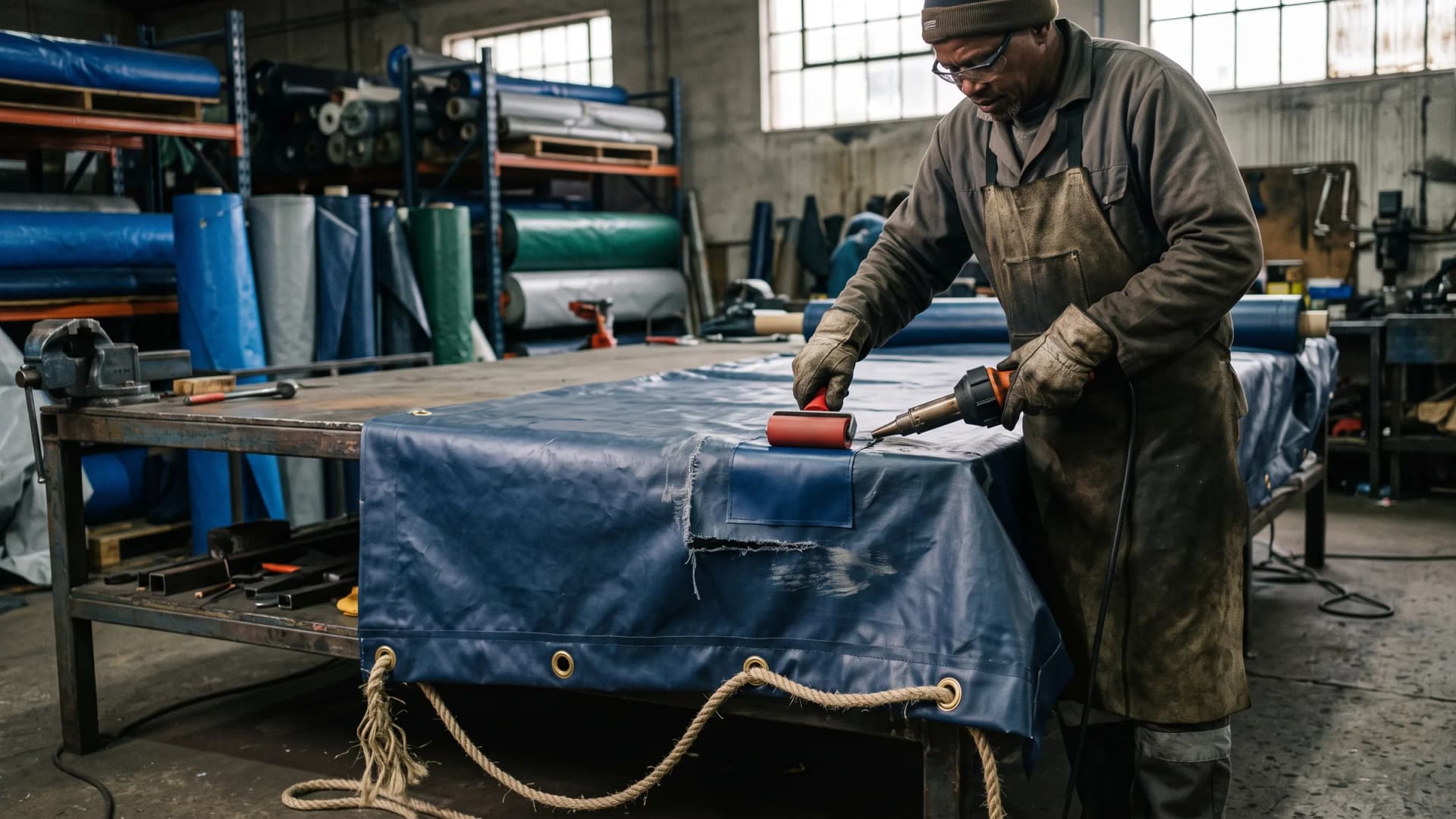
The message we get most often is a photo of a tear with the words "can this be fixed?" The answer is usually yes, and usually for a lot less than people expect. But not always, and a repair on a cover that is finished is money spent twice: once on the patch and again on the replacement three months later.
So here is how we actually decide, and how you can decide before you send the photo.
Three questions, in order
Every repair-or-replace call comes down to the same three things. Take them in this order, because the first one settles most cases on its own.
1. Is the material still good?
Damage is one thing. A finished material is another, and no patch fixes it.
Two quick tests tell you almost everything. The palm test: rub the top surface firmly with a dry hand. A little dirt is fine. A fine powder that coats your palm means the PVC has chalked, the plasticiser is leaving the sheet, and it is in the last part of its life. The fold test: take a corner and fold it hard back on itself. Good PVC folds and springs back. Tired PVC goes white along the crease or cracks. On canvas, the equivalent is to push a thumb into a sun-exposed area: if the weave gives or tears under moderate pressure, it has rotted.
If the sheet passes both tests, almost any damage is repairable. If it fails both, stop reading and start measuring for a new one, because a weld needs sound material on both sides of the joint and there is not any.
2. Where is the damage?
- Edges, hems, and eyelets. This is where covers fail most and repair best. Pulled or elongated eyelets, a hem that has opened, a rope channel that has split, a corner that has torn out under load. All routine: we cut back to sound material, re-hem, re-weld or re-stitch, and set new eyelets.
- Seams. A welded seam that has lifted or a stitched seam that has opened is a re-weld or a re-stitch along the length. Quick if the surrounding sheet is sound.
- The field of the cover. A puncture, a cut, or a tear in the open sheet gets a welded patch on PVC or a stitched patch on canvas, oversized so the load runs into good material around it. A patch done properly is as strong as the sheet.
- Abrasion. The spot where a cover has been rubbing on a rail, a coping edge, or a load. Thin but not through yet, and the right time to reinforce it. Through and frayed, and it is a panel replacement inside the cover.
3. How much of it?
This is the honest one. A single tear on a good sheet is an easy yes. Two or three problems on a good sheet are still a yes. But when the damage is spread across roughly a third of the cover or more, or every seam is going at once, the repair bill starts to approach a new cover and the rest of the sheet is about to follow. At that point we will tell you to replace, and we would rather tell you that than take the job.
What we fix, whatever it is
We repair covers regardless of who made them. It makes no difference to the work whether it came from our factory, another manufacturer, or a hardware store years ago. What comes through the door in a normal week:
- Truck and trailer tarps with load damage and pulled eyelets
- Boat, caravan, and vehicle covers with tears, split seams, and worn tie-down points
- Pool and jacuzzi covers with edge failures and fitting damage
- Koi vats and pond liners that weep at a seam or have a puncture
- Blinds with a failed hem, a torn window panel, or worn stress points
- Bags, tool rolls, and equipment covers with broken zips and stitching
- Printed banners needing re-hemming and new eyelets
The techniques are the same ones we use on our own products: heat welding on PVC, industrial walking-foot stitching on canvas and heavy fabric, brass and nickel eyelets set with a proper rolled flange, and weld-on or stitched webbing where a stress point needs reinforcing. Our welding, stitching, and sewing page covers the full list.
If it is a replacement
When the sheet is finished, a new cover is the right answer, and it is cheaper to order in spring than in the week the rains arrive. For PVC we build in 550, 700, or 800 gsm depending on how exposed the cover is and how hard it works. Canvas is the choice where you want the cover to breathe, on a boat or a caravan that lives under it for months. Vehicle and trailer covers tie down with eyelets and rope. We template to the actual item, keep the template on file, and there is no minimum order.
A replacement is also the moment to fix whatever killed the old one. If it wore through on a rail, we reinforce that spot. If the eyelets pulled, we reinforce the hem. If it sat in full sun for five years, we talk about a heavier grade or some shade. The tarpaulin care guide covers the habits that make the next one last.
What to send us
Two photos and one sentence is enough to quote:
- The whole cover, laid out or in place, so we can see the size and the general condition.
- A close-up of the damage with something for scale: a tape measure, a hand, a coin.
- What the cover is for and roughly how old it is.
If there is more than one problem area, photograph each one. If you are not sure whether it passes the palm and fold tests, say so and we will tell you what we think from the photos before you bring it in.
WhatsApp 083 631 5329 and we will come back within 24 hours with a repair price, or an honest recommendation to replace and a price for that instead. Most small repairs are done in a day or two, and we slot urgent jobs ahead of the queue where we can.
Frequently asked
Yes. We repair PVC and canvas covers regardless of who made them: tarps, truck and trailer covers, boat and caravan covers, pool covers, koi vats, blinds, bags, and banners. If it is welded or stitched fabric, we can almost certainly fix it.