
Chilled and frozen on one truck: how bun partitions split a refrigerated load
A bun partition turns one refrigerated truck body into separate zones, so mixed loads travel together, door openings stay in one section, and raw and ready-to-eat product stay apart. How it works and what to ask for.
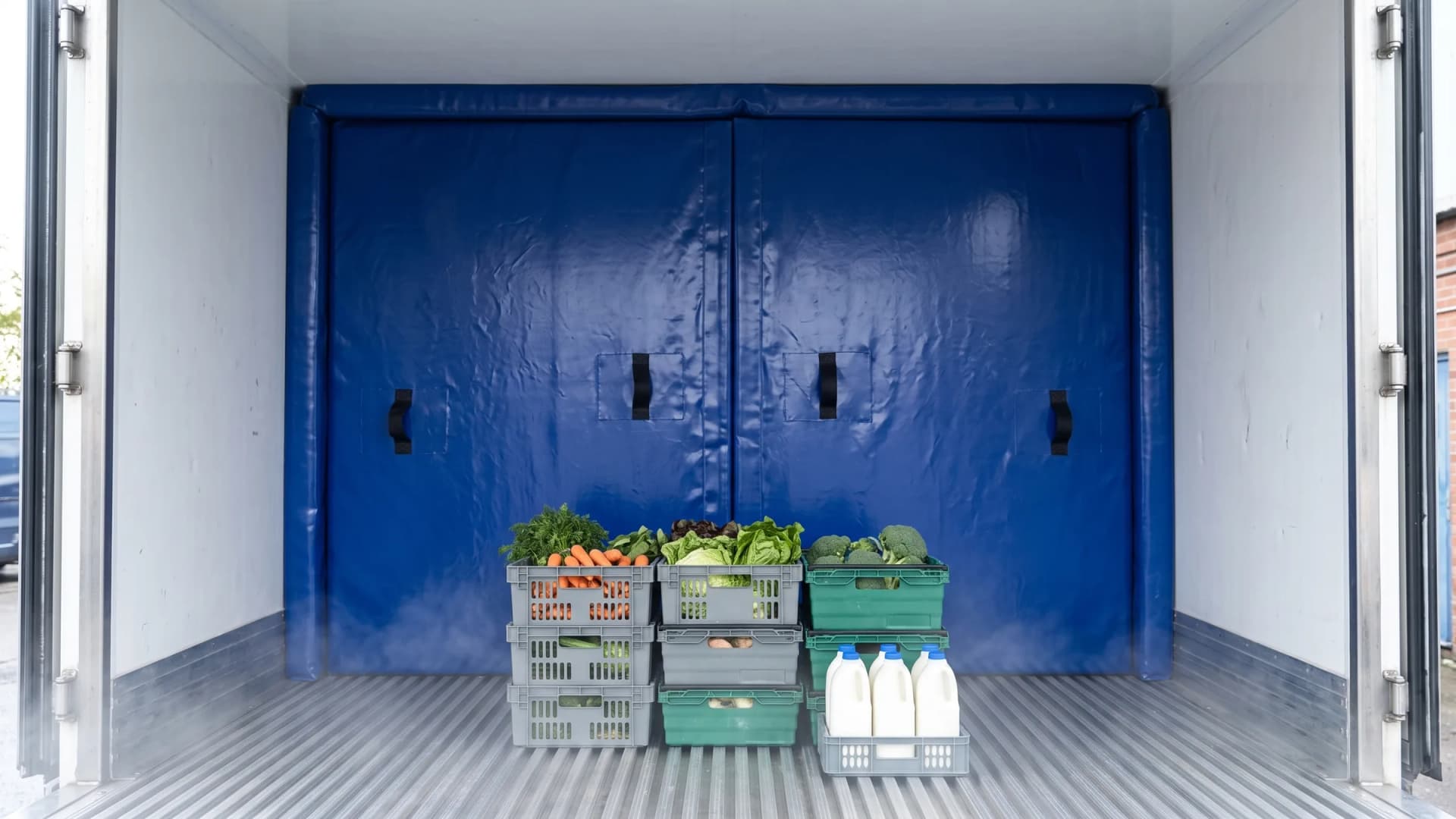
A refrigerated truck with one open body does one job at a time. Chilled or frozen, one customer's load or another's, and every time the doors open at a drop the whole body warms up. A bun partition changes that. It is an insulated wall that stands across the body and turns one load space into separate zones.
That is the whole idea, and it is why partitions are a standard part of cold-chain fleets: one vehicle carrying a mixed load, instead of two vehicles half full.
What a bun partition does in a truck
- Creates separate zones. The partition closes off one section of the body from the next, so each zone keeps its own air and its own temperature.
- Keeps door losses in one zone. On a multi-drop run, the doors open at every stop. With a partition in place, the warm air that rolls in reaches the zone nearest the door, not the product at the far end.
- Shrinks the space you cool. As drops come off, move the partition forward so the unit cools the load that is left, not an empty body.
- Keeps loads apart. Raw and ready-to-eat product, or food and non-food lines, travel on one vehicle with a physical wall between them.
Chilled and frozen: what the partition does, and what the unit does
This is worth being clear on before you buy. The partition holds the line between zones. It does not make cold air. If you want chilled in one zone and frozen in the other, your refrigeration unit has to be able to cool each zone, which usually means a unit with a separate evaporator for each compartment.
On a single-zone unit, the partition still earns its place. It reduces the volume the unit has to hold down and keeps door openings from warming the whole body. Your refrigeration supplier can tell you exactly what your unit can do, and we make the partition to suit.
Cross-contamination
Your food-safety plan sets the rules for what can travel together. What a partition gives you is a solid, wipe-clean wall between loads, rather than a gap or a sheet of plastic. The 800 gsm PVC faces wipe down with standard food-industry sanitiser, so the partition does not become the dirty surface between two clean loads.
Busy season
Year-end is the busiest stretch for most cold-chain operators. More drops, longer routes, fuller trucks. A truck that can carry two kinds of load on one run is worth more in November and December than at any other time of year, and a partition is a far smaller spend than another vehicle.
What makes a partition hold a zone
A partition is only as good as its build. Ours have four parts:
- 800 gsm PVC on both faces, the heaviest PVC we work with, because the skin takes crates, boots, and daily handling.
- A high-density foam core, which does the insulating.
- A scuff board that takes the knocks from pallet jacks and crates so the PVC does not.
- Webbing handles, so two people can lift, fit, and move the partition between drops.
Our guide on what each part does and how to make a partition last goes into each one, with a care routine.
Cold rooms too
The same build splits a walk-in cold room into zones. If your cold room is the problem rather than the truck, our article on zoning a cold room before you upsize the plant covers it.
Repairs and refurbishment
A worn partition does not need scrapping. We re-skin partitions in new PVC, fit fresh scuff boards, and re-stitch handles, reusing the foam core where it is still sound. We repair existing partitions regardless of who made them, so send a photo before you replace one.
How to order
Every partition is made to the body it goes in. WhatsApp 083 631 5329 with the internal width and height where the partition will stand, how many you need, and a photo of the inside of the body. We come back within 24 hours with a price and lead time. There is no minimum order, and volume pricing applies on orders of 10 or more identical partitions, which helps when you are fitting out a fleet. Full specs are on our thermal partitions page.
Frequently asked
An insulated divider for a refrigerated truck body. Ours have a high-density foam core inside 800 gsm PVC, a scuff board to take the knocks, and webbing handles for fitting and moving it. It splits the load space into separate temperature zones. You will also hear them called thermal partitions.