
Tarpaulin care: how to make a cover last ten years
Simple cleaning, storage, and repair habits extend a good tarpaulin from five years to ten. Here is what 30 years of factory experience tells us.
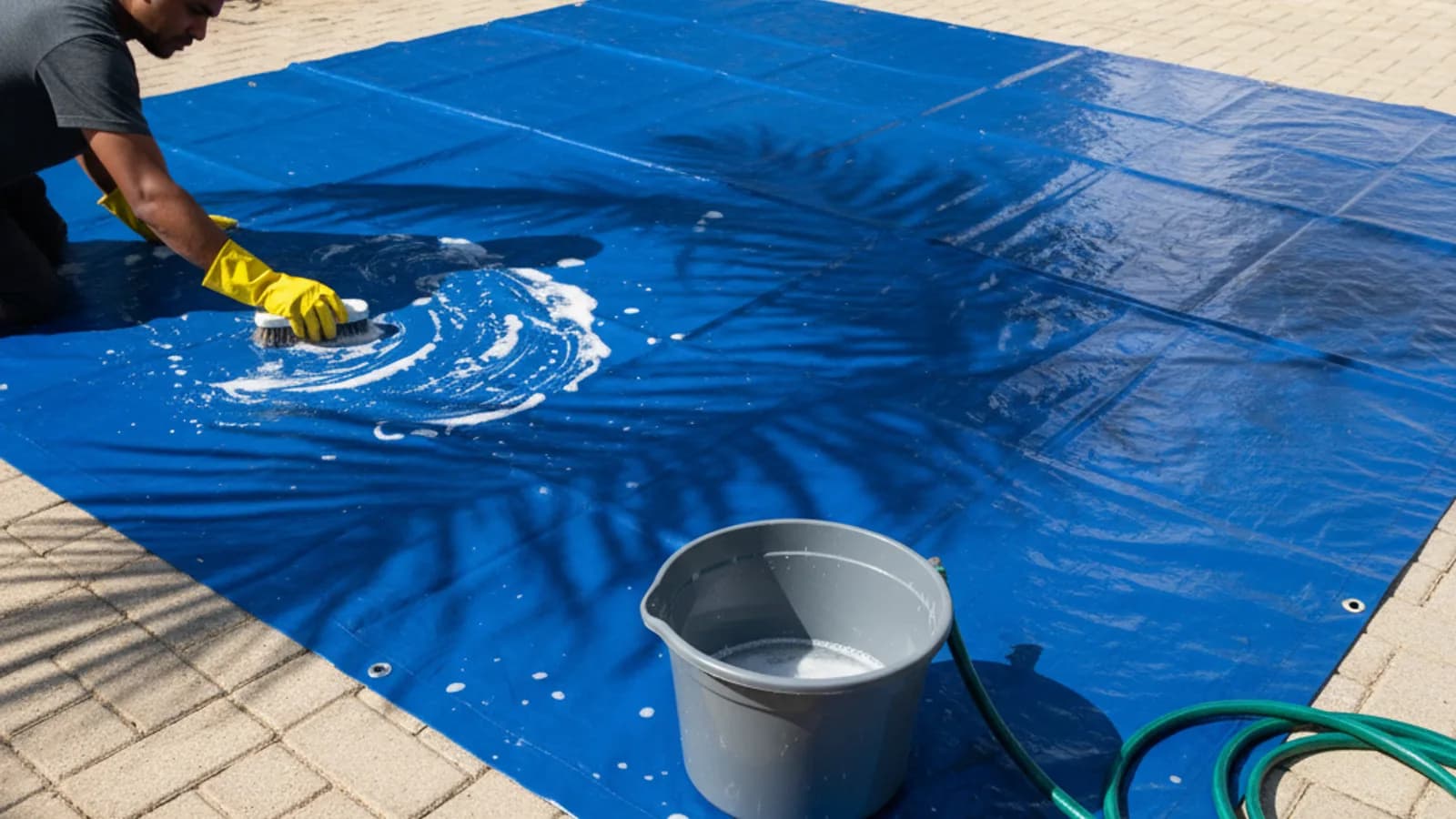
A well-built tarpaulin should last five to seven years in hard outdoor use. We see tarps we sold in 2015 still in service in 2026, which is ten-plus years, and in every case the owner has a few habits in common. This is the short version of what those habits are.
Cleaning: mild, not harsh
The single most common reason a tarp fails early is wrong cleaning. Someone decides it looks grubby, attacks it with bleach or a solvent, and two months later the PVC has cracked along a seam or the canvas has weakened its waterproof finish.
The right approach:
- Mild dish soap and warm water. Sponge or soft brush.
- Rinse thoroughly with clean water.
- No bleach. No solvents. No petrol. No pressure washer on PVC.
- For canvas, never machine wash. Spot-clean and let it dry flat.
On our custom covers we include a small care sheet with every order. Most customers throw it out, then phone us six months later asking why the tarp is cracking. Mild soap only.
Storage: dry and off the ground
If you are going to pack a tarp away for six months, it needs to be fully dry before it is rolled. A damp tarp rolled in a storage room grows mildew inside two weeks, and mildew weakens the waterproof treatment permanently.
- Let it dry fully in the sun or in a ventilated area.
- Roll rather than fold. Folds create creases that crack over time.
- Store off the ground on a pallet or shelf.
- Keep it away from rodents. Mice chew through canvas in one night.
Tensioning: tight, but not stretched
A tarp that is flapping in the wind will fail at the eyelets inside one season. A tarp that is over-tensioned will tear at the corners. The right tension is snug with no flap, no deep sag, and no visible stress lines at the attachment points.
For truck and industrial covers, check tension before every trip. Ratchet straps loosen over time and over highway vibration.
Water pooling: do not let it happen
Water pooling is the number-one killer of otherwise healthy tarps. A puddle forms in a low point, sits for a week, and either leaks through or stretches the tarp permanently. Prevention:
- Set up with enough slope for water to run off. 5 degrees minimum, more is better.
- After heavy rain, check for pooling and knock the water off from underneath.
- If pooling keeps happening, re-rig with a centre pole or an extra tie-down point.
UV: the invisible killer
Modern PVC and canvas are UV-stabilised, but nothing is UV-proof. Over five to seven years, UV breaks down the polymers and the fabric chalks or cracks. You cannot prevent this, but you can slow it by:
- Rolling and storing tarps that are not in active use.
- Using darker colours (black, navy, olive) which last longer than whites or bright colours.
- Re-treating canvas with a waterproofing spray every two years for vehicle covers.
When to repair, when to replace
Small tears, isolated eyelet failures, and edge fraying are repair jobs. We re-weld, patch, and re-eyelet at the factory for tarps we originally made. Lead time on repairs is usually 3 to 5 working days.
Signs it is time for a new tarp:
- Multiple seam failures
- Chalky, powdery surface on PVC
- Canvas that feels stiff or brittle to the touch
- Eyelet row pulling out in multiple places
If you are not sure, send photos on WhatsApp and we will advise honestly.
Full range on the tarpaulin product page.
Frequently asked
Mild, not harsh. Warm water, a soft brush, and a gentle detergent. Harsh solvents and high-pressure washers do more damage than the dirt does, because they attack the material and open up welded seams.