
PVC or canvas? Choosing the right tarpaulin for the job
PVC is fully waterproof and heavy. Canvas breathes and is lighter. Here is how to choose the right tarp for farms, transport, vehicles, and outdoor cover.
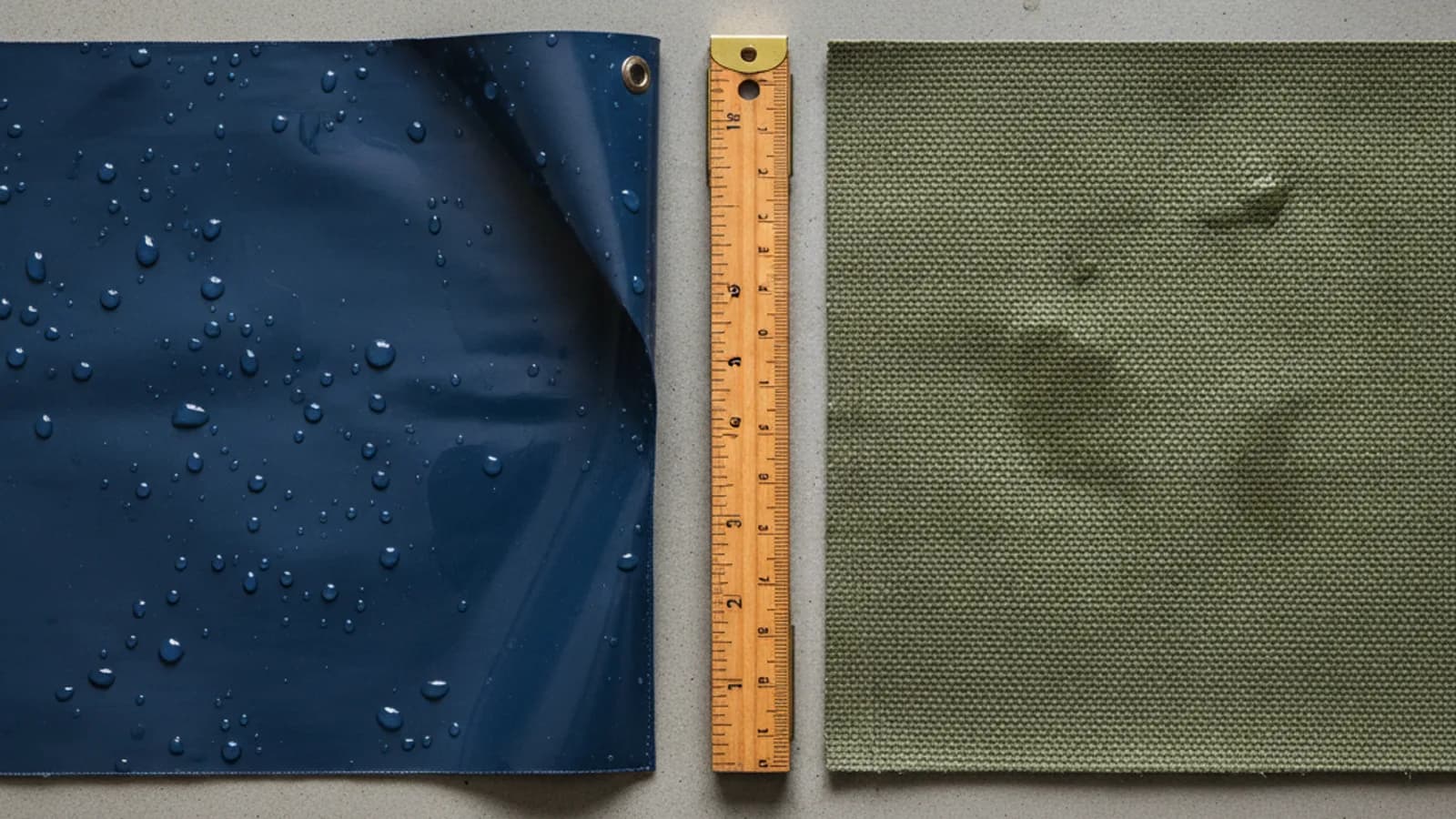
Every week someone phones the factory and asks which they should buy. Usually they have been quoted one or the other by a supplier and want a second opinion. The honest answer is that both are the right choice for some jobs and the wrong choice for others. Here is how we split them.
The short answer
- PVC if you need full waterproofing and the cover will not sit directly on paint, upholstery, or living material.
- Canvas if the cover will touch a vehicle, a boat, a tent frame, or anything where trapped humidity causes damage.
Most buyers pick correctly when they understand that canvas breathes and PVC does not.
What PVC does well
PVC is a plastic sheet, typically 550 to 800 gsm in the weights we stock. Water rolls off, UV stabilisers keep it from going brittle, and welded seams mean no stitch holes to leak through. It lives outdoors for five to ten years without failing if you get the weight right.
Where it shines: industrial tarps on mining sites, construction stockpiles, haystack covers, pool covers, boat moorings, truck-load covers, and anywhere you need absolute waterproofing.
Where it fails: directly on a vehicle. Trapped moisture under a PVC tarp on a bakkie builds up inside two weeks and leaves you with mildew on the upholstery and rust on the paintwork.
What canvas does well
Canvas is a woven fabric, usually 420 to 680 gsm in cotton or cotton-poly blend, treated with a waterproofing finish. Rain still runs off, but humidity escapes. That breathability is why it is the default for anything that wraps a vehicle, a boat, or living cargo.
Where it shines: canvas bakkie and boat covers, trailer tops, 4x4 fit-outs, hay covers on open trailers, tents and stage canvas, and livestock pen covers.
Where it fails: long-term pooled water. A canvas tarp that collects water in a dip will eventually leak through. You need to keep it tensioned.
Weight matters more than material
A 420 gsm PVC will fail faster than a 680 gsm canvas for the same job. Weight, in grams per square metre, tells you how much material is between you and the weather. Cheap tarps are light tarps. When you see R400 for a "heavy duty" truck tarp at a hardware store, that is a 300 gsm PVC with a single layer of stitching. It will last one summer.
Our baseline for outdoor industrial use is 800 gsm PVC. For vehicle covers we stock 540 and 680 gsm canvas.
A quick decision table
| Use case | Material | Typical weight |
|---|---|---|
| Bakkie or 4x4 cover | Canvas | 540 gsm |
| Boat cover | Canvas | 680 gsm |
| Hay, stockpile, or pool | PVC | 550 to 800 gsm |
| Mining or construction | PVC | 800 gsm |
| Truck-load cover | PVC | 680 to 800 gsm |
| Event or stage | Canvas | 540 gsm |
When in doubt, phone us
Most of the calls we get start with "I do not know what I need". That is fine. Describe the job, we will tell you what works. Send photos on WhatsApp or visit the tarpaulin product page for the full spec range.
Frequently asked
Neither. They solve different problems. PVC is fully waterproof and heavier; canvas breathes and is lighter. The right choice depends on whether the thing underneath needs to be sealed off or needs to be allowed to breathe.