
Fitting bun partitions across a fleet: one spec, every truck
Buying partitions one truck at a time leaves a fleet with a mix of sizes, builds, and suppliers. How to survey the fleet, standardise where the bodies match, and keep re-orders and repairs simple.
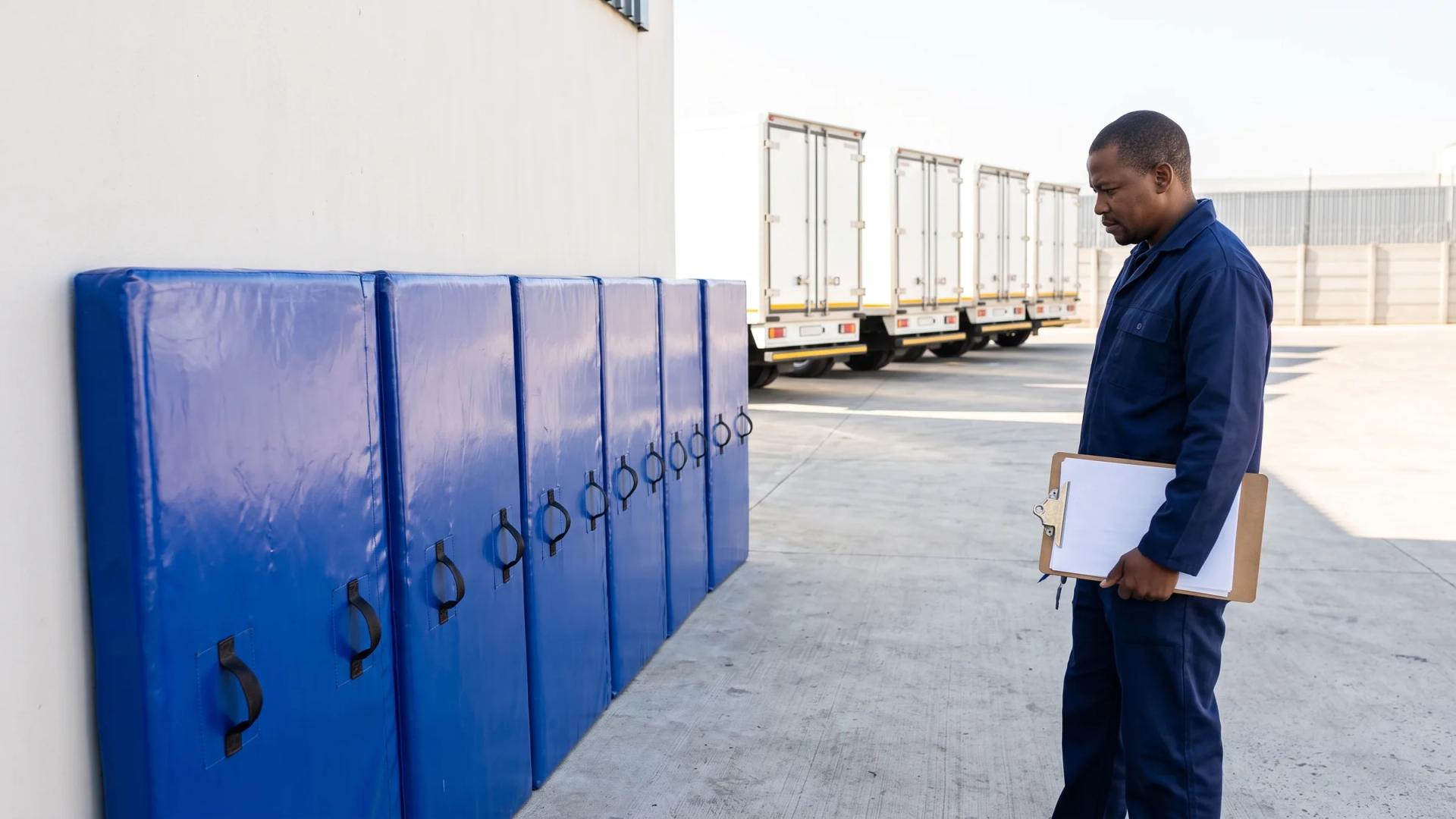
Most fleets collect bun partitions the way they collect trucks: one at a time, from whoever could deliver quickest. A few years on, the yard holds a mix. Different sizes, different builds, some that fit their trucks and some that do not, and nobody is quite sure which partition belongs in which body.
Putting the whole fleet on one spec fixes that. Here is how to do it without taking trucks off the road.
Start with a fleet list
Before anyone measures a partition, list the trucks. For each vehicle, note:
- The fleet number or registration.
- The internal width and height of the body at the point where the partition stands.
- How many partitions it runs, and where.
- What it carries: chilled, frozen, or mixed loads.
The list usually shows that a fleet has far fewer body sizes than it has trucks. That is where the savings start.
Standardise where the bodies match
Trucks with the same internal body dimensions can share one partition spec. One size, one build, and any partition fits any of those trucks. Fewer sizes mean simpler spares, simpler re-orders, and no hunting for the right partition at the start of a shift.
Where the bodies differ, each one gets a partition made to it. A standard partition forced into an odd body leaves gaps at the edges, and the air between the zones leaks straight through them.
One build across the fleet
Use the same build on every truck: 800 gsm PVC on both faces, a high-density foam core, a scuff board, and webbing handles. The same build means the same care routine, the same wear parts, and refurbishments you can plan, because every partition wears the same way.
Mark each partition
Mark each partition with the body size or the fleet numbers it fits. A paint marker on the edge is enough. It stops a partition ending up in a truck it does not seal, which is the most common way a good partition does a bad job.
Patterns on file
Once we have made a partition for one of your bodies, the pattern stays on file. Replacements and new trucks of the same body are faster to make, and they come out the same size as the last ones.
Plan refurbishment as a cycle
Do not wait for partitions to fail all at once. Bring a few in at a time to be re-skinned, with fresh scuff boards and re-stitched handles, while a spare or two covers the trucks they came out of. The fleet never runs short, and no truck waits for a partition.
We repair and refurbish partitions regardless of who made them. That matters for a mixed fleet: you can keep the existing partitions working while you move the fleet onto one spec, and replace them as they wear out rather than all at once.
Our guide on what each part of a bun partition does covers the care routine, and our year-end partition check is a good first pass through the fleet.
Pricing
There is no minimum order. Volume pricing applies on orders of 10 or more identical partitions, which is one more reason to standardise wherever your bodies allow.
How to get a fleet quote
Send the fleet list (vehicles, internal body width and height where the partition stands, and partitions per truck) with a photo of a typical body interior on WhatsApp 083 631 5329, or through our contact page. We come back within 24 hours with a price and lead time. Full specs are on our thermal partitions page.
Frequently asked
Only across trucks whose bodies have the same internal width and height. Where the bodies differ, each needs a partition made to it, because a partition that does not fit the body leaks air at the edges.