
Spring pond restart: quarantine vats, transport vats, and getting koi through the warm-up
The spring warm-up is the most dangerous month of the koi year, and it is when most new fish arrive from the winter shows. A quarantine vat, set up properly, is the cheapest insurance a pond keeper will buy. What to specify, how to run it.
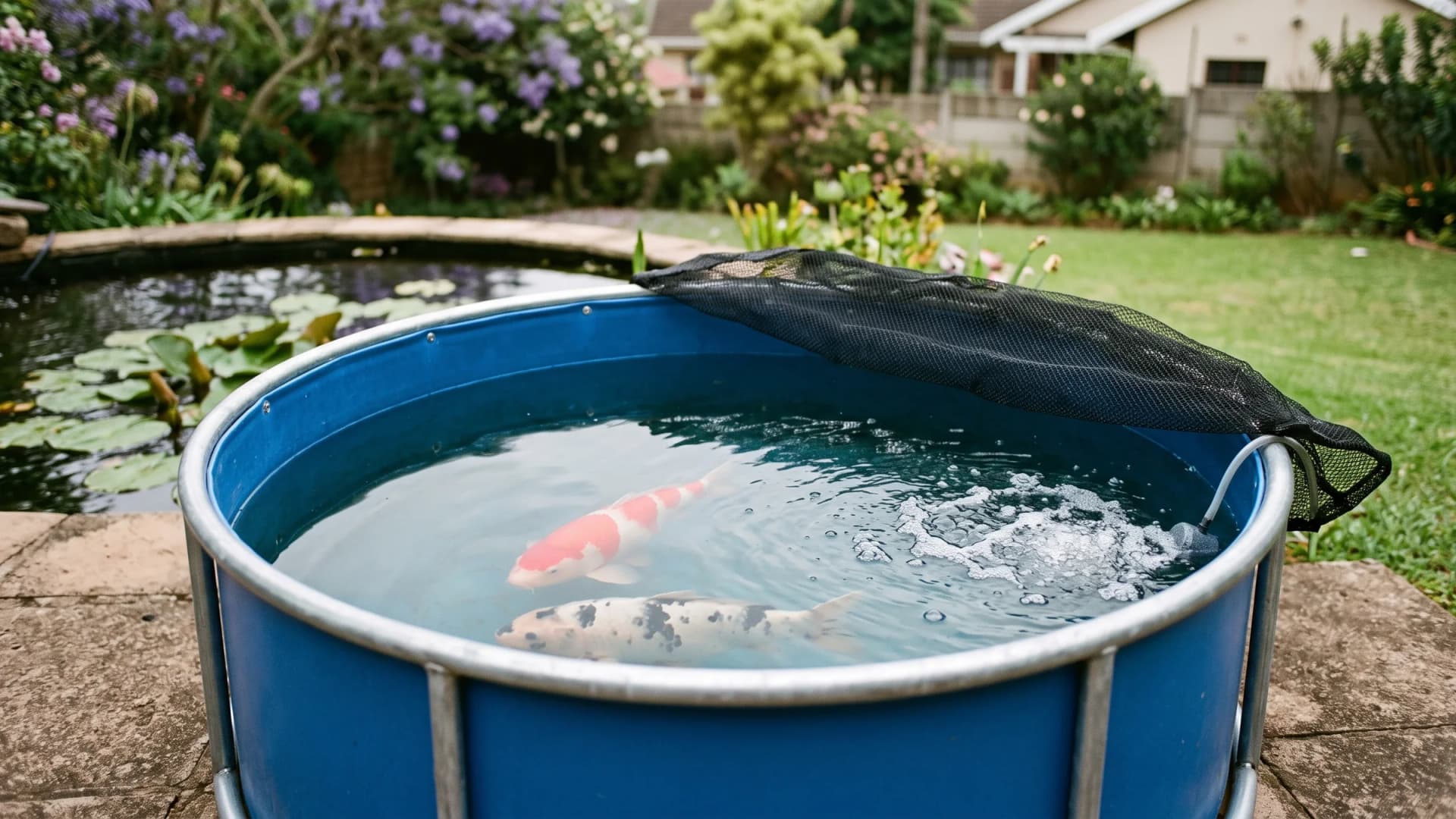
Ask any experienced koi keeper which month they lose fish and the answer is rarely mid-winter. It is the warm-up. As the water climbs through the low teens in September and October, parasites and bacteria wake up faster than the fish's immune system does, and a koi that looked fine in July suddenly sits on the bottom with its fins clamped.
It is also the month when most new fish arrive. The winter shows have just finished, the dealers are unpacking new stock, and the temptation is to drop that new Kohaku straight into the pond and enjoy it. That is how a collection built over a decade is lost to a fish that cost a few thousand rand.
The answer is not complicated. It is a quarantine vat, run properly, for three to four weeks.
Why a separate vat, not the pond
A quarantine vat does two jobs. It keeps a new fish away from the collection long enough for anything it is carrying to show itself, and it gives you a small, controlled body of water where you can actually see the fish, watch it eat, and treat it if you have to, without medicating thousands of litres in the main pond.
The key word is separate. A vat plumbed into the pond's filtration shares the water, which defeats the point. It needs its own aeration and its own nets, bowls, and equipment that never go near the main pond during the quarantine period.
What to specify
The vat itself is the same construction we have built for koi societies and breeders for more than twenty years: 800 gsm PVC, RF-welded so there are no stitch holes to leak or shed fibres, on a galvanised steel ring frame that goes together in minutes. What changes from one keeper to the next is the size and the fittings. Worth deciding before you order:
- Size. For one to three show-size fish, a 1.5 m to 2 m diameter vat at 0.8 m depth is the usual choice. A nervous new fish settles faster in deeper water than in a wide, shallow one. Bigger collections go to 2.5 m or 3 m. We build to the dimensions you give us, so measure the paving or lawn first, including the space you need to walk around it with a net.
- A drain. A 50 mm bulkhead with a ball valve on the bottom turns water changes from a bucket job into opening a tap. In quarantine you will be doing a lot of water changes. Specify it.
- A net cover. Herons and hadedas find a vat within a day, and a new fish in strange water jumps. A bird-proof net cut to the rim with an elastic or drawstring edge solves both. Black or forest green.
- Aerator mounting points. The vat needs its own air supply running around the clock. A mounting point on the rim keeps the airline off the ground and the pump dry.
- A viewing window. Optional, but a clear panel in the side of the vat lets you inspect a fish's belly and fins without lifting it, which is exactly what you want to be doing daily in the first fortnight.
If you already have a transport vat for shows, it will do the job at a pinch, but a transport vat is deliberately shallow and wide to fit a trailer. A dedicated quarantine vat is a better shape for keeping a fish calm for a month.
Setting it up
Put the vat on level ground, in shade if at all possible. Direct spring sun on a small body of water swings the temperature by several degrees between dawn and mid-afternoon, and stable temperature is most of what quarantine is about. A shade canopy over the vat, or a spot under a covered patio, is worth more than any medication.
Fill it a few days before the fish arrive, dechlorinate it, and get the air running. Ideally seed a small sponge filter from the main pond's filter so there is some biological activity from day one. Match the water temperature to the bag or transport water when the fish goes in, and float or drip acclimatise it rather than tipping it straight across.
Then leave the fish alone for the first two days. No food, minimal handling, the net cover on. After that, feed lightly, watch how it eats and how it holds its fins, and do small, regular water changes for the full three to four weeks. If anything looks wrong, you are treating a couple of thousand litres, not the whole pond, which is the entire reason the vat exists.
The pond itself: restart, do not strip
While the new fish is in quarantine, the main pond gets its spring service, and the mistake here is over-cleaning. A biofilter that has ticked over through winter is worth keeping. Rinse media in pond water, not tap water, and do it in stages over a few weeks rather than all at once.
Do inspect the liner. Winter is hard on the edges of a pond: the waterline band where sun, frost, and the wet-dry cycle meet is where PVC liners go first, followed by any spot where a rock or a pump base has been rubbing. Run a hand along the exposed liner above the waterline and look for chalking, stiffness, or a thin spot. A small area of damage is a patch job. If the whole liner has gone stiff and brittle, that is a replacement, and spring is when you want to find that out.
Feeding follows the water, not the calendar. Start with a small amount of an easily digested food once the water is reliably above the low teens, and only move to a full summer diet once the fish are active and the temperature is stable. A cold snap in October is normal in KZN and Gauteng, and the fish will tell you when they are ready.
Moving fish in and out
If the new fish is coming home from a show or a dealer some distance away, it travels best in a proper transport vat with aeration rather than a bag in the boot. Our transport vats are built shallower and wider to sit in a trailer or bakkie bed, with the same welded seams and an optional net cover for the drive. Anything over a few hours on the road needs a battery aerator and a planned water exchange along the way.
Repairs on any vat or liner
If you already own a vat that weeps at a seam, has a puncture from a dropped tool, or has a worn scuff area on the bottom, bring it in. We repair vats and pond liners regardless of who made them. Because it is welded PVC, the repair is a re-weld or a patch that is as strong as the original sheet, and it costs a small fraction of a new liner. Spring is the right time to do it, before the fish is in the water and the repair becomes urgent.
How to order
Send us the space you have, the number and size of fish, and whether you want a drain, a net cover, a viewing window, or aerator mounts. A photo of the spot helps.
WhatsApp 083 631 5329 and we will come back within 24 hours with a spec, a price, and a lead time. A standard quarantine vat is a few working days if we have the PVC in stock, and we prioritise ahead of the queue for fish already on their way. Vats, transport tanks, and pond liners all sit under our ponds and tanks range.
Frequently asked
Because a healthy-looking fish can still carry parasites and pathogens that only show once it is stressed and the water warms. Reputable sellers reduce the risk, they do not remove it. A separate vat for three to four weeks means one new fish cannot take out a pond you have spent years building.